If you’ve ever wondered what Port of Loading is, you’re not alone. In the world of international shipping and freight logistics, the Port of Loading (POL) is a term that surfaces repeatedly in shipping documents, logistics contracts, and freight schedules.
But what exactly does it mean? Why does it hold such importance? And how does it influence the smooth delivery of your cargo from one country to another?
The Port of Loading, often abbreviated as POL, is more than just a point on the map; it’s a crucial milestone in your cargo’s journey. From the moment your goods leave the warehouse until they board an ocean vessel, every stage is impacted by the procedures and protocols followed at the POL.
Understanding the meaning of ‘port of loading’ is particularly crucial in the context of global trade, as it enables businesses to avoid delays, save money, and ensure full compliance with customs regulations.
As we dive more in-depth into this mesmerizing subject, you’ll learn not just the POL shipping definition, but also how POL operations work, how it differs from the Port of Discharge (POD), and how exporters can better manage loading port export cargo.
Whether you’re an exporter, freight forwarder, or simply a curious reader exploring the logistics world, the topic of the Port of Loading is far more engaging than it seems, and it touches every container crossing international waters.
The Port of Loading (POL) Shipping Definition
A Gateway to Global Trade
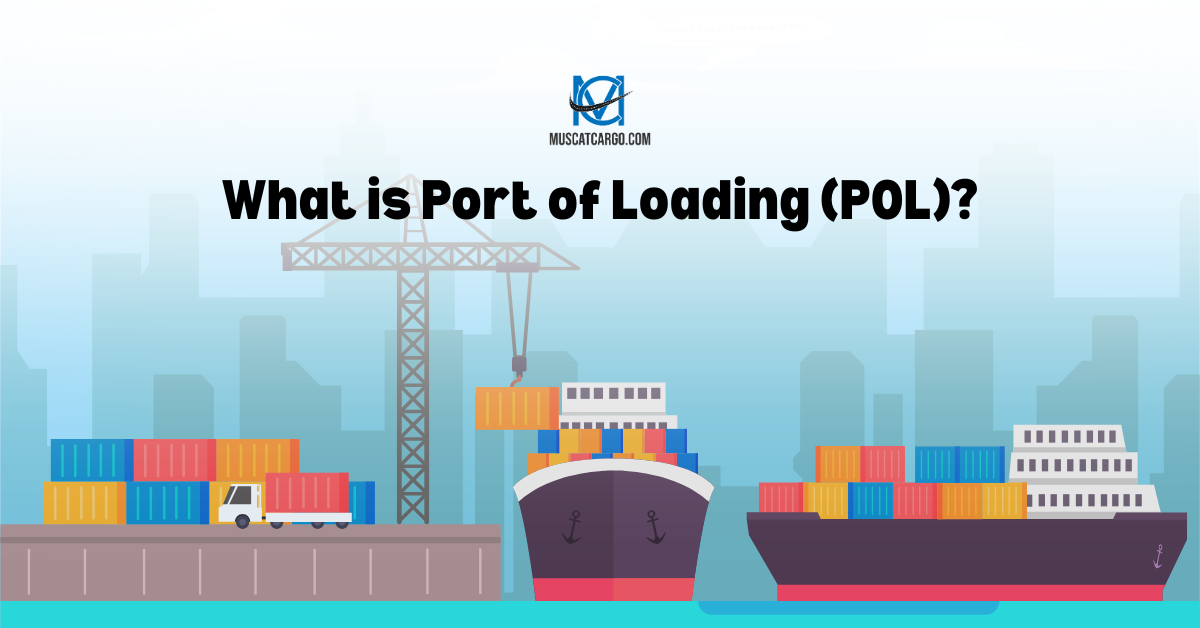
So, let’s start with the basics, the POL shipping definition. In the simplest terms, the POL is the location where cargo is physically loaded onto the shipping vessel. This marks the beginning of the ocean leg of the cargo’s journey. It’s where the exporter’s responsibility ends (depending on Incoterms, such as FOB), and the carrier begins. But as you might expect, there’s much more to it than just “putting cargo on a ship.”
The POL is the official export point in all shipping documents, and every shipping line, customs authority, and logistics stakeholder relies on this data to facilitate the movement of your goods. The name of the POL appears on the Bill of Lading, commercial invoices, certificates of origin, and even on the cargo labels themselves. Inaccurate POL information can lead to misrouted cargo, delayed customs clearances, and financial penalties.
Understanding the POL shipping definition enables exporters to manage their operations more effectively, ensure smoother coordination with freight forwarders, and align schedules with ocean carriers more efficiently. It also reinforces one undeniable truth: the POL is where your international trade officially takes flight, or rather, sets sail.
Port of Loading Meaning in Practical Terms
More Than a Place, It’s a Process
The concept of POL becomes even more interesting when viewed through the lens of practical shipping operations. It’s not just a port. It’s a series of procedures, responsibilities, and compliance checks that turn your shipment into an international export.
Think of it this way: your cargo leaves the factory, gets packed into containers (or remains loose), and then moves via truck or rail to the shipping terminal. What happens next? That’s where the POL takes over. It’s at this location that customs clearance takes place, that containers are weighed and verified (thanks to VGM regulations), and that export permissions are secured. Only once these tasks are completed can your goods be cleared for loading onto the vessel.
So, the POL’s meaning expands beyond geography. It is a checkpoint that ensures everything is ready legally, physically, and operationally for your cargo to exit one country and enter another. It also sets the stage for everything that comes next, including handling at the destination Port of Discharge (POD).
Difference Between POL and POD
Why Does This Matters in Shipping?
Here’s where things get a bit tricky, but also more exciting: the difference between POL and POD. Many newcomers to international trade confuse these two. But knowing their roles can make or break your shipping strategy.
The POL is the origin, where your cargo is loaded onto the vessel. The Port of Discharge (POD) is the destination where your cargo is unloaded from the ship.
These two ports determine how costs are divided, who is responsible for what, and how shipping timelines are calculated. For example, if your Incoterm is FOB Muscat, then the seller/exporter is responsible up to the POL. At the same time, the buyer handles everything from the POL onwards, including the POD.
Mixing up these ports in documents can delay customs clearance, cause cargo misrouting, and trigger costly demurrage fees.
That’s why understanding the difference between POL and POD isn’t just a technicality; it’s a foundational element of effective logistics management.
POL Terminal Operations
What Happens at the Port of Loading?
When we discuss POL terminal operations, we’re referring to the actual processes involved in loading cargo onto a ship. This behind-the-scenes orchestration involves multiple actors, including staff from shipping lines, terminal workers, customs officers, freight forwarders, and security teams. But what happens here?
First, containers arrive at the terminal and are registered into the terminal operating system. This includes scanning documents, tagging containers, and verifying the weights of containers. Then comes the VGM (Verified Gross Mass) process, a safety requirement to ensure ships are correctly balanced. Next, customs inspections are performed, especially for high-value or sensitive goods.
Once cleared, containers are assigned a spot in the yard and positioned in line with the vessel’s stowage plan. Cranes then load the cargo onto the ship, often within very tight scheduling windows.
These POL terminal operations are more than logistics. They’re a dance of precision, compliance, and coordination that ensures every container is where it needs to be at the right time, on the right vessel, and with the proper paperwork.
Loading Port Export Cargo Process
A Story of Coordination and Speed
Now, let’s shift our focus to the loading port export cargo journey from the factory floor to the ship deck. This process is the heartbeat of global trade, especially for exporters.
It all starts with order fulfilment. Once goods are ready, they’re packed into containers or pallets. Export documents are prepared: commercial invoices, packing lists, certificates of origin, and shipping instructions. The cargo is then moved via road, rail, or a mix of both to the POL.
Upon arrival, the terminal receives the cargo and enters it into the export queue. Customs clearance follows a critical step. The cargo cannot board a vessel until it has the green light from local authorities. After clearance, the cargo undergoes POL terminal operations: weighing, scanning, tagging, and allocation for vessel loading.
Finally, the cargo is loaded onto the vessel, marking the completion of the loading phase at the port of export and the beginning of the sea leg of its journey.
What’s fascinating here is the level of precision and speed required. Delays at any stage, including truck arrival, document errors, or customs holds, can result in a missed vessel, which can set the exporter back by weeks.
Port of Loading in Real-World Context
Muscat’s Role in Global Trade
Consider the example of the Port of Sohar in Muscat, Oman, a rapidly growing export hub. For many exporters in the GCC region, this port serves as the gateway to Europe, Africa, and Asia. The POL operations here are top-class, driven by digitized processes, swift customs procedures, and excellent port infrastructure.
From mineral exports and textiles to machinery and electronics, the cargo exported through Muscat’s loading ports is staggering. Thanks to robust POL terminal operations, exporters enjoy faster turnaround times, fewer documentation errors, and reduced instances of cargo mismanagement.
Muscat is a prime example of how a well-run POL can enhance the entire supply chain’s efficiency and how crucial the POL is in shaping trade outcomes.
Why Every Exporter Should Understand the Port of Loading
By now, you’ve likely realized that the POL is much more than a shipping term. It’s the starting point of every export story, the place where all cargo gets its final thumbs-up before leaving a country.
Understanding the POL shipping definition, the meaning of POL, and the distinction between POL and POD enables exporters to make informed decisions, avoid penalties, and establish trust with buyers and logistics partners alike.
Additionally, keeping track of POL terminal operations provides exporters with more control over schedules, helps reduce delays, and enhances communication with customs and freight agents. In short, the more you know about the POL, the better your business will perform in global trade.
The Port of Loading is Where Shipping Begins
The POL is not just a dot on the map; it’s the origin of possibility, the first step in a long journey, and the heartbeat of your export strategy. By understanding the POL shipping definition, how POL terminal operations work, and what the port of loading means in both legal and operational terms, you authorise your business to ship smarter, faster, and more efficiently.
Every container that sails from a POL carries with it stories, deadlines, commitments, and business goals. So, whether you’re exporting from Muscat or managing logistics across continents, make the Port of Loading your ally in achieving logistics excellence.
Ready to simplify your exports from Muscat? Partner with Muscat Cargo for expert handling of your shipments at the POL. From documentation to loading port export cargo solutions, we ensure smooth, fast, and compliant international shipping. Contact us today and take your logistics to the next level.